
WPC fluted wall panels combine a wood-look finish with dimensional lines for commercial facades, hotel entrances and outdoor feature walls. Different profiles, colors and finishes create effects ranging from closely spaced ribs to deeper architectural grooves.
For importers, distributors and contractors, selection involves appearance, maintenance and installation requirements. This guide explains the product structure, specifications and applications, helping buyers choose a suitable range for their market or project.
What Are WPC Fluted Wall Panels?
WPC fluted wall panels are decorative cladding profiles extruded from wood-based material, thermoplastic polymers and additives. Repeated raised ribs and recessed channels create a dimensional wood-look surface. Exterior models are used on building facades, commercial entrances and courtyard walls, together with suitable fixings and trims.
These products are commonly called fluted wall panels, composite slatted cladding or WPC fluted 3D wall panels.
Unlike individually installed decorative slats, an integrated panel incorporates several ribs into one profile. Their spacing is set by the cross-section, and adjoining panels form a repeating pattern.
Profile geometry and surface finish affect different aspects of appearance. Rib width, groove depth and spacing determine the overall lines and shadows. Wood grain, brushing and color influence the close-up finish. Compare the face, cross-section and connected samples when selecting a product.
For exterior applications, select an outdoor model before narrowing down the appearance and accessories. The panel and fixing arrangement must suit sunlight, rain, temperature changes and the supporting structure.
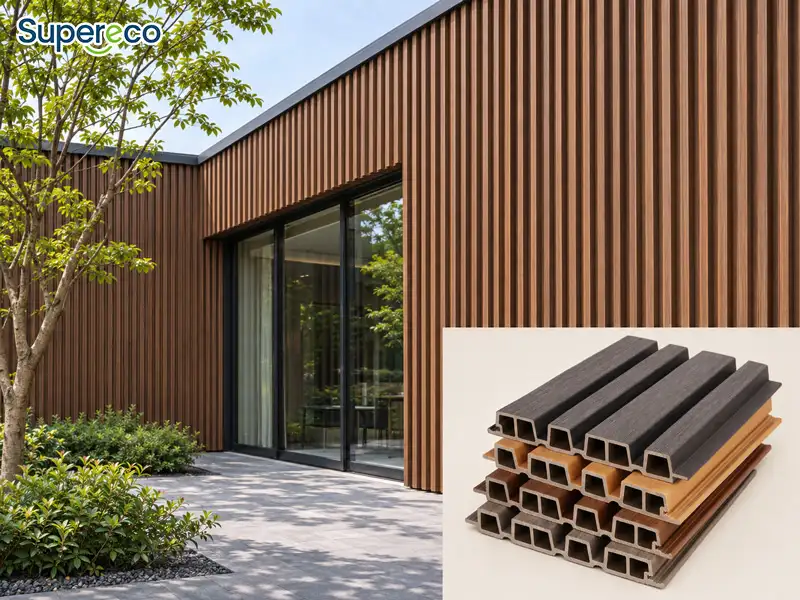
Benefits of Capped WPC Fluted Panels
Capped WPC fluted panels incorporate an outer protective layer around the composite core. Their practical benefits concern the exposed surface, consistent design and routine maintenance.
An additional layer of surface protection
The cap combines color, texture and surface protection in an outer layer, reducing direct exposure of the core. Compare its coverage and the selected model’s weathering performance against the project environment.
Connections, cut ends and trims also need suitable detailing so that the finished surface and installation work together.
Integrated ribs reduce repeated positioning
Several ribs are formed within one profile, reducing the repeated measuring and positioning involved in installing separate decorative slats. This makes a consistent pattern easier to establish.
Panel joints still affect the result. Assemble several samples to check whether the rhythm continues evenly across connections and to plan the edges of the wall.
Wood-look finishes with straightforward maintenance
Wood-grain and brushed surfaces provide different textures, while gray and brown tones suit different architectural palettes. WPC cladding generally does not require periodic repainting; routine care focuses on removing dirt and surface stains.
For hotels and commercial properties, this reduces the need to plan repeated coating work. Walls near roads, entrances and planting areas still need cleaning according to actual exposure.
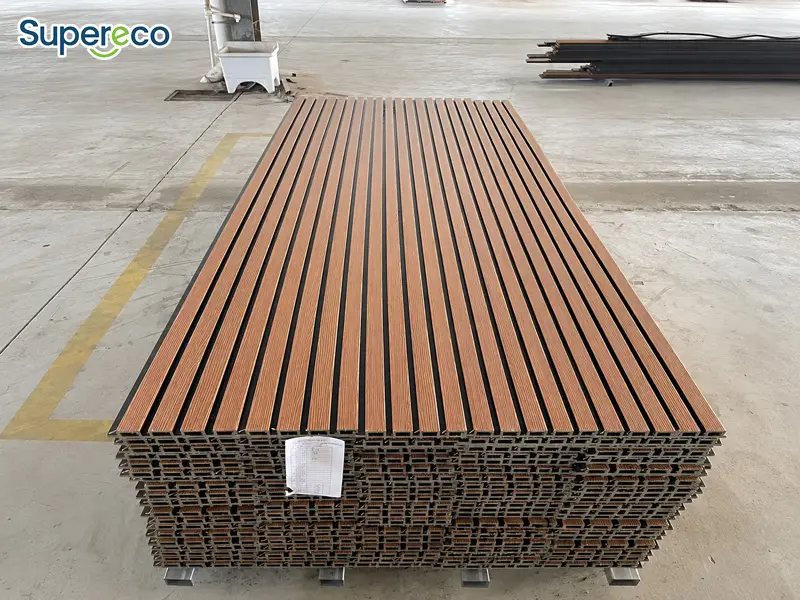
Supereco Panel Specifications & Factory Support
Supereco offers outdoor capped fluted profiles in different widths and depths. The following examples show cross-section dimensions as width × thickness.
|
Factory-direct supply and customization
Supereco has manufactured WPC products since 2006, with more than 120 production lines supporting bulk supply and OEM/ODM orders for importers, distributors and contractors.
Outdoor fluted panels are available in different profiles, colors and finishes, with profile and dimensional customization. Dimensional and surface checks, in-house laboratory testing and export packaging support project orders and repeat supply. Matching installation accessories are also available.
Buyers can work directly with the factory to confirm specifications, samples and pricing, whether selecting an existing profile or developing a custom product.
WPC Fluted Panels vs Individual Timber Slats
Both create a wood-look linear finish, but their design flexibility, installation arrangement and maintenance differ.
|
WPC fluted panels are worth comparing when a project needs a consistent pattern and less periodic coating work. Timber offers different possibilities where variable spacing, independent elements or natural grain differences are central to the design.
Compare costs for the same wall area and finished effect, including supports, fixings, trims and installation rather than material prices alone.
Outdoor Applications & Profile Selection
Commercial facades: assess the overall pattern
Hotels, offices and commercial buildings are often viewed from a distance. Compare rib width, groove depth and repeated joints before planning panel lengths and connections.
Gray WPC fluted 3D wall panels can complement glass, metal and stone. Compare physical samples under the same daylight to assess undertones and texture rather than relying entirely on screen images.
Entrances and feature walls: examine close-up details
At entrances, brushing, wood grain, joints and exposed edges are more noticeable. Review front, side and connected samples.
Brown wood-look finishes add visual warmth. Where flat and fluted panels meet, plan thickness differences and transition trims before installation.
Courtyard walls: plan drainage and cleaning access
Walls close to planting, ground level or irrigation need attention at their tops, bases and corners.
When choosing WPC wall panels for outdoor use, identify the location, shelter, substrate and supporting structure. Freestanding fencing requires a separately matched structural and fixing arrangement.
Frequently Asked Questions
1.Can outdoor fluted panels be installed horizontally or vertically?
The orientation must suit the specific profile and fixing system. Check connections, support layout, drainage and trims before confirming the arrangement.
2.What should be checked before approving samples?
Confirm the model, cross-section, color and finish. Connect several samples to examine the joints, and retain an identified approval sample as the production reference.
3.How should outdoor panels be cleaned?
Remove dirt using water and a mild cleaning method suitable for the selected surface. Test cleaners in an inconspicuous area first and avoid unapproved solvents or aggressive methods.
4.What information is needed for a custom quotation?
Provide the application, reference image or section drawing, target color, required length and estimated quantity. Project drawings or a distributor’s initial profile and color selection help define the supply requirements.
Planning a commercial facade or expanding an outdoor cladding range? Supereco offers fluted profiles, colors and finishes with dimensional and profile customization. Submit your reference images, specifications and quantity to discuss samples, accessories and factory pricing.